
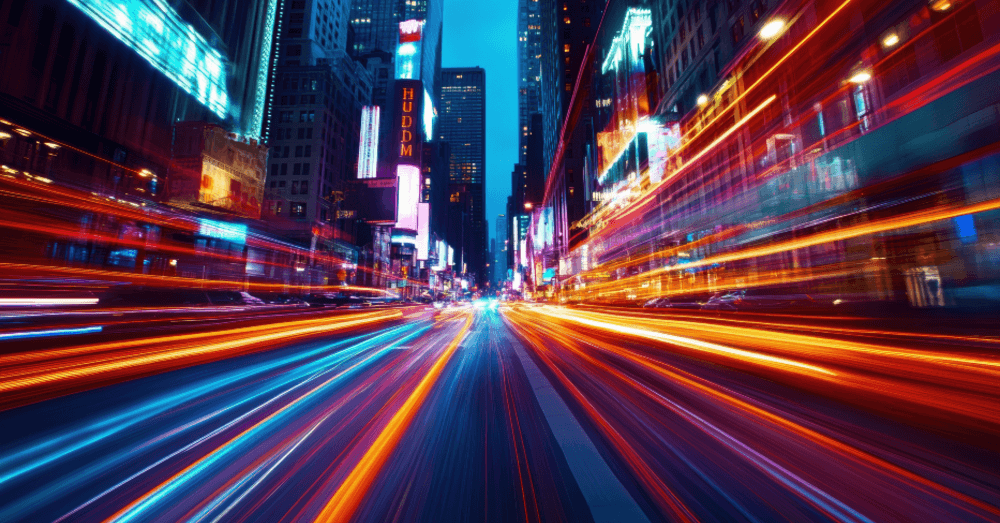
Something interesting is happening in the travel world this year. Millions of people are skipping the midday crowds, dodging the heat, and planning entire trips around what happens after the sun goes down. It’s called noctourism, and it’s shaping up to be one of 2026’s defining travel trends.
- A Booking.com survey of 27,000 travelers across 33 countries found that 62 percent are now considering nighttime destinations, while 54 percent are shifting activities to the evening to avoid daytime heat.
- The noctourism category grew 25 percent in 2024, according to tour operator Wayfairer Travel, and that number is anticipated to double by 2035, according to research firm Future Market Insights.
- Noctourism covers everything from stargazing and night-time safaris to after-dark city tours and museum lates.
Night Safaris Are Revealing What Daytime Misses
If you’ve ever been on a traditional African safari, you probably saw sleeping lions and distant elephants. But you likely missed most of the action. The average African safari in the daytime typically only sees around 30 percent of mammals, with around 70 percent of them being nocturnal, including the bush baby and the honey badger. That stat alone explains why night drives are surging in popularity.
Wildlife Worldwide now offers a new South Africa trip to see niche nocturnal mammals like the aardvark and aardwolf, while Wayfairer Travel reports a 35 percent rise in demand for night safaris in Africa compared to 2023. Parks in South Africa and Kenya are seeing growing demand for night drives where travelers can witness leopards and honey badgers in their active states, rather than sleeping under a bush.
At KAAV Safari Lodge near India’s Nagarhole Tiger Reserve, guests gather with flashlights as dusk settles to spot moths, beetles, and spiders weaving silk under moonlight. These aren’t your typical safari highlights, but they’re exactly the kind of surprises that noctourism brings to the table.
Glowing Oceans and Bioluminescent Beaches
Few natural spectacles beat watching the ocean light up in electric blue. In places like Puerto Rico and the Maldives, the ocean glows neon blue at night, a phenomenon that is invisible by day and requires no artificial lighting, only the movement of water.
Mosquito Bay on Vieques, Puerto Rico, holds the Guinness World Record as the brightest bioluminescent bay in the world, powered by an exceptionally high concentration of dinoflagellates that light up at the slightest movement in the water. Visitors paddle kayaks through the glowing water, leaving trails of blue light behind every stroke.
In Florida, the Indian River Lagoon near Cocoa Beach, Titusville, and Merritt Island is one of the few places in the world where you can take bioluminescent kayaking tours through glowing waters. Summer bioluminescence season runs from May through early October, with peak brightness typically occurring during June, July, and August when dinoflagellate concentrations are highest.
And you don’t have to fly to the tropics. The phenomenon occurs in Southern California near Laguna Beach, Encinitas, Cardiff State Beach, and San Diego’s Mission Beach, La Jolla Shores, and Blacks Beach.
Museums After Hours Are Having a Moment
Night owls with a taste for culture are finding plenty to love, too. Museums at Night was first introduced in the UK in 2008 and has since grown into an international event, created to encourage more people to visit museums and galleries by offering them a nighttime experience.
In the U.S., the trend is picking up speed. Fernbank Museum of Natural History in Atlanta offers Fernbank After Dark on the second Friday of each month, featuring museum exhibits, live music, full bars, tapas menus, and science demonstrations for guests aged 21 and over. Each month features a different science theme.
The MIT Museum runs its own After Dark series as a monthly adults-only, after-hours event full of science demonstrations, tastings, conversation, and interactive play with live music and a cash bar. The Metropolitan Museum of Art in New York offers a two-hour Met After Dark tour where visitors see the museum in the rare beauty of evening light, viewing selected works with an expert in art history.
Why Heat and Crowds Are Pushing Travelers Into the Night
One of the biggest drivers behind noctourism is practical. One traveler described how 40-degree Celsius temperatures in Japan made daytime sightseeing unbearable, so she wandered Kyoto’s geisha district after dark and “had it practically to myself.”
Tour operator Flash Pack says demand among millennial travelers for nighttime experiences increased by 40 percent. Co-founder Lee Thompson notes that people now crave experiences “beyond evenings in a bar, which seems to have fuelled noctourism.”
The travel industry also supports this shift because it spreads tourism across more hours, reducing pressure on busy daytime attractions, while governments welcome the trend because it boosts local economies without overloading cities.
Is After-Dark Travel Right for Your Next Trip?
Noctourism isn’t a passing fad. The wave reflects something bigger happening in travel right now, with survey data suggesting travelers are actively restructuring trips around experiences that can’t be replicated closer to home. Hotels and resorts across the country now double as open-air observatories, with many offering structured stargazing programs and astronomy guides.
Whether you’re kayaking through bioluminescent water in Puerto Rico, tracking nocturnal wildlife in Kenya, or sipping cocktails at a museum after-hours event, the night has plenty to offer. You don’t need to live near a coast or a big city to start planning, either. From Fairborn, Ohio, to just about anywhere on the map, your next great travel memory might be waiting just after sunset.
